
How to Become a High School Teacher in QLD
1 December 2025
How to Become a High School Teacher in QLD
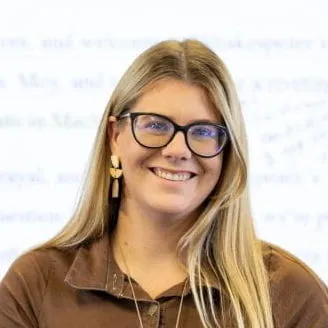
By Jordan Moy
Inclusive Practices Teacher
Columba Catholic College
Becoming a high school teacher in Queensland isn’t just a career choice with the benefit of paid holidays at the end of each term–it's a deeply personal and rewarding journey, often shaped by the communities we grow up in and the different paths we take along the way. My own journey to becoming a teacher was far from traditional, beginning in a small rural town on the Darling Downs, moving through university courses that weren’t quite the right fit for me, and eventually finding my place in the classroom (although this might look different to how you imagine).
If you’re exploring how to become a teacher in Queensland, you’ve come to the right place. This article includes the full breakdown of the numerous pathways, essential requirements, and simple steps involved in becoming a fully-qualified teacher–supported by the very real (and at times, unconventional) personal experiences that shaped my own teaching career.
Becoming a high school teacher in Queensland is a meaningful pathway that combines professional qualifications, practical experiences and the feeling of fulfillment that comes along with working with young people. Regardless of whether you begin your journey directly after school or discover teaching later in life, the process remains the same: complete an approved teaching qualification and register with the Queensland College of Teachers (QCT).
At this stage, you might be wondering, why become a high school teacher in Queensland? Well, the answer is simple–above all else, it allows you to give back to the community. Not only are we given the privilege to help shape the minds of future generations, we also play a crucial role in our communities (especially in regional and rural areas) where schools act as the central hubs for connection and support. In my own journey, I learnt very quickly that teaching wasn’t simply about delivering content–it’s about helping students find confidence, belonging, and care in their learning. That sense of impact on both the students and the community is ultimately what led me to the profession.
Qualifications Needed to Become a High School Teacher in QLD
To teach in a Queensland secondary school, you must obtain one of the state's recognised initial teacher education (ITE) qualifications. Luckily, it’s not a “one and done” kind of pathway. Queensland actually accepts several recognised ITE qualifications, each offering diverse and flexible study options that can be selected and tailored to suit your personal journey. These include:
Bachelor of Education (four-year program)
- Bachelor of Education (Secondary)
- Double degree such as Bachelor of Science / Bachelor of Education
The most common pathway is a four-year Bachelor of Education (Secondary). Some universities also offer dual degrees, pairing education with specialist areas such as Science or The Arts to give you a broader skillset.
Graduate Diploma of Education
Those who already hold a three-year (minimum) bachelor’s degree in a non-teaching field can complete a one-year Graduate Diploma of Education (Secondary) to become eligible for teaching.
Master of Teaching
A Master of Teaching is another pathway for current degree holders and is typically completed over two years. This option is designed for those who want a more comprehensive ITE program which includes an intensive focus on pedagogy and offers more practical placements.
Breakdown of qualification elements
All approved ITE programs in Queensland must include:
- A minimum of four years of tertiary study
- At least one full year of ITE training
- Supervised teaching placements
- Relevant studies in your chosen teaching areas (e.g., English, Mathematics, History)
In my case, after exploring a few other fields, I enrolled in a Bachelor of Secondary Education (BSEd) at the University of Southern Queensland (UniSQ). The program allowed me to specialise in two teaching areas of my choice. I chose a major in English and a minor originally in History. Later, after gaining experience working with students with diverse needs, I changed my minor to Inclusive Education. Although this late change added a little bit of extra time onto my degree, it was one of the best decisions I have ever made because it allows me to bring genuine passion and enthusiasm to my classroom everyday.
The hands-on components of the BSEd, including professional placements and supervised teaching, were a major influence in my decision to pursue this qualification. I was drawn to the opportunity to specialise in subjects I loved and to gain real classroom experience. While balancing study with practical placements was challenging, it allowed me to apply my theoretical knowledge in real-world teaching situations. It didn’t take long for me to realise that the rewards certainly outweighed the challenges! Through this experience I was able to consolidate theory with practice, see the direct impact of a positive learning experience on students, build my confidence as a teacher, and discover a passion for Inclusive Education by working with students with diverse needs. Experiencing these key aspects of my qualification shaped not only my skills as a high school teacher but also my overall teaching philosophy, which reinforces the importance of adaptability, empathy, and student-centred learning.
In addition to my core studies, my university provided me with the opportunity of studying two elective subjects aligned with Inclusive Education or Health & Physical Education (HPE). Since I was already undertaking a minor in Inclusive Education, I decided to expand my skills and understanding by opting for HPE-related electives. From the available options, I chose a Health and Wellbeing course as well as a Sports Administration, Coaching and Officiating course. These units have proved to be a significant influence on my active involvement in extracurricular sports at school–particularly netball–where I have been the coach of our senior netball team for the last three years.
Pathways to Becoming a High School Teacher in QLD
Traditional pathways
Traditional pathways are favoured by people who know early on that teaching is their dream career. Many of the teachers I work with followed the straight-from-school path and often say they appreciated having four years to grow both personally and professionally before stepping into their first classroom. The extended preparation time included in the traditional pathway allowed them to develop essential skills in behaviour management, curriculum knowledge, and lesson planning, while also developing the confidence needed to manage a classroom of their own–because a room full of teenagers can certainly be daunting at first! For many, those years at university were just as much about discovering who they were going to be as educators as they were about gaining the qualifications to teach–whether that meant becoming the calm, unshakeable one, the tough-but-fair one, or the energetic one who lives off caffeine and controlled chaos.
Traditional pathways include:
- Bachelor of Education (Secondary)
- Dual degrees such as a Bachelor of Arts/Bachelor of Education
Graduate programs for degree holders
For those that have completed a bachelor’s degree in another area and now wish to move into teaching, they can complete additional studies in the form of a Graduate Diploma of Education (Secondary) or a Master of Teaching. I’ve taught alongside many colleagues who made a mid-career transition, and they often bring strong real-world knowledge to their classrooms–something students respond very well to. For example, one of my current colleagues, Tom, left school and completed his apprenticeship as a diesel fitter, working with agricultural equipment. After this he moved overseas and began working as a sports coach within a sporting development program in Scotland. During this time, he obtained a number of coaching-related qualifications, and later began his teaching degree while working as a school officer. Tom often reflects on how his varied background allows him to bring real-world experiences into classroom contexts, helping students see the connection between what they are learning at school and how they will one day use those skills in real life.
Alternate pathways
Outside of the traditional pathways for those who went directly into a teaching degree or completed an additional post-graduate or master’s degree, the QCT may also deem that another course meets the equivalent of either a four-year teaching degree (or part thereof), or a one year graduate teacher education program (or part thereof). These are assessed on a case-by-case basis by QCT and can be helpful for people who trained internationally or completed specialised degrees or courses with education related components. While I haven’t personally met another teacher who has been granted full teacher registration solely through recognition of prior learning (RPL), I have worked with many who have had specific courses within a previous non-teaching degree recognised as a part of their ITE training through RPL.
Interestingly, my own pathway didn’t lead me straight into teaching. When I first considered becoming a teacher, I had no idea how much it would change the way I viewed education and the community. For as long as I can remember, I had wanted to become an architect. However, upon realising I really didn’t want an office job in the city, I looked towards something more… impactful and rewarding. From here, I graduated from St Ursula’s College in Toowoomba and moved to the Sunshine Coast, where I began studying a Bachelor of Paramedicine (BPSc) at UniSC. While I found this course both fascinating and benevolent, my extremely empathetic nature couldn’t cope with the emotional burnout that came with it.
From here, I moved back home to Pittsworth, took a gap year (which was supposed to last 12 months) and began some relief work as a school officer at Clifton State School and Greenmount State School. I immediately felt like I had found my calling and after only 3 months, I enrolled in a Bachelor of Secondary Education at UniSQ in Toowoomba.
Choosing my subject areas was a really difficult decision. I knew that if I selected Science, I could potentially RPL my previously completed Biology and Chemistry courses from my BPSc, which might have reduced the time needed to complete my degree. However, I wanted to teach subjects I was genuinely passionate about, so I ultimately opted for my two favourite subjects from high school: English and History.
During my second year of study, I moved to Duaringa, in Central Queensland, and began working as a Home Tutor on a cattle station through the Capricornia School of Distance Education (CSDE). It was through this adventure that I gained hands-on experience as a “teacher” in a tiny outback schoolroom with three students. While I studied externally, taking online courses during the evenings, I was able to consolidate my teaching skills by putting them into practice each day in the schoolroom. This gave me an upper hand in my studies and allowed me to apply my personal experiences to the theoretical components of my degree.
After my time spent as a Home Tutor, I took up work as a school officer again. This time at the Charters Towers School of Distance Education (CTSDE), where I delivered online literacy and numeracy support lessons to a selection of students requiring additional support. I soon developed an interest in supporting students with disabilities which is what led me to change my minor to Inclusive Education.
Soon after, I was offered a position as a Permission to Teach (PTT) teacher, which allowed me to gain PTT registration and formally begin teaching before completing my degree–an experience I am still very grateful for to this day.
However, it wasn’t long before I yearned to experience high school teaching in a physical classroom. I dropped my resume and unofficial transcript to Columba Catholic College in Charters Towers, and was offered another PTT position as an English teacher on their secondary campus. Both the school and the Townsville Catholic Education Office (TCEO) made my transition to the classroom seamless. They provided me with an incredible mentor, my colleague Andrew Butler (who, sadly, is retiring at the end of this year), and supported me in completing my practicums within my regular classes, with guidance from a supervising teacher who offered valuable feedback on my lessons. It was during this experience that I full-heartedly fell in love with teaching, and I have never looked back since.
Now, I am a fully-qualified, second year teacher, undertaking the role of Inclusive Practices Teacher at Columba Catholic College where I support students with diverse learning needs, collaborate with colleagues to help them successfully implement differentiation in their classrooms, and run intervention programs such as MacqLit. While my pathway has certainly been unconventional, I hope it helps others understand that we don’t always get things right the first time, and if you’re looking for that feeling of fulfilment in your career, teaching is certainly a job that will bring you daily joy.
Registering as a Teacher With the QCT
Once you’ve completed the necessary qualifications, the final step to becoming a classroom teacher in Queensland is registering with the QCT. This is a non-negotiable requirement for anyone wanting to teach in Queensland schools.
To be eligible for registration, you must have appropriate qualifications, meet the English language proficiency requirements (if applicable) and meet the suitability to teach criteria.
Types of registration and eligibility
The QCT offers three main types of registration:
- Provisional Registration – for graduates who have completed their teaching qualification but have not yet met the full teaching experience requirements (minimum of one year or 200 days equivalent of teaching experience).
- Full Registration – granted once you have successfully completed your provisional period and met all professional standards.
- Limited Registration – usually issued in specific circumstances, such as for PTT roles or specialist positions.
It is important to note that all teachers begin with provisional registration and work toward full registration while actively teaching.
Key steps in the application process
It’s recommended that you apply for registration during the final semester of your ITE program. Doing this allows the QCT to begin processing your application early, which means your registration can often be granted soon after you officially graduate.
The application process itself involves a few key steps. You’ll need to collect your official academic transcripts, which are used to verify that your qualification meets QCT standards. You’ll then complete the QCT registration application (online), which includes identity verification, suitability checks, and nominating your approved teaching areas. The online application form is quite user-friendly and adjusts based on the information you enter. Once you submit the form, you’ll receive an email checklist that clearly outlines what documents you will need to provide.
There’s also a financial perk for new graduates. Application fees are reduced for those who have completed a QCT-approved or accredited program, and this discount applies for up to two years after graduation. You can still apply after that time, but you’ll need to pay the full application fee and be assessed against the qualification requirements that are current when you apply.
Luckily, I had already successfully applied for limited registration (PTT) on two occasions, so when it came time to apply for my provisional registration, my registration type simply rolled over. This made the transition much smoother and far less stressful than I had anticipated. However, it’s important to note that for those who are not already in the system, the registration process can take several weeks—just as it did the first time I applied—particularly while documents are being reviewed.
My biggest tip for new graduates is to apply as early as possible, double-check every document before submitting, and keep digital copies of everything. While the process can feel daunting at the time, receiving confirmation of registration is an incredibly rewarding milestone and makes all the hard work feel worthwhile!
Final Thoughts
Becoming a high school teacher in Queensland isn’t just about ticking off qualifications and paperwork–it’s about stepping into a role that will challenge you, shape you, and reward you in ways you simply can’t predict at the beginning. Some days you’ll feel like a superhero. Other days, you’ll survive on caffeine, gratitude notes from students, and the knowledge that you showed up and made a difference anyway.
If there’s one thing my journey has taught me, it’s that there is no single “right” way to become a teacher. Whether you know from the age of five that teaching is your calling, or you stumble into it after a few unexpected detours (like I did), every experience you bring with you matters. Each step–whether in a university lecture theatre, a tiny outback schoolroom, a distance education role, or your very first classroom–shapes the educator you become.
Teaching is not always easy, but it is always meaningful. You will celebrate lightbulb moments, guide students through challenges, laugh more than you expect, and occasionally wonder how you managed to get through the day–but then you’ll do it all again tomorrow because the impact is both real and important. You don’t just teach subjects. You teach confidence. You model resilience. You help young people believe in themselves.
So, if you’re standing at the start of your journey wondering whether teaching is for you, my advice is this: follow the path that excites you, trust your instincts, and don’t be afraid if your road looks different to everybody else’s. The classroom needs passionate, adaptable, empathetic people–and if you’re even considering teaching, chances are you already have what it takes.
And who knows? One day you might find yourself standing in front of a class of teenagers, caffeine in hand, smiling to yourself and thinking, “I can’t believe this is my job!”